

This page is also available in Arabic.
What it does
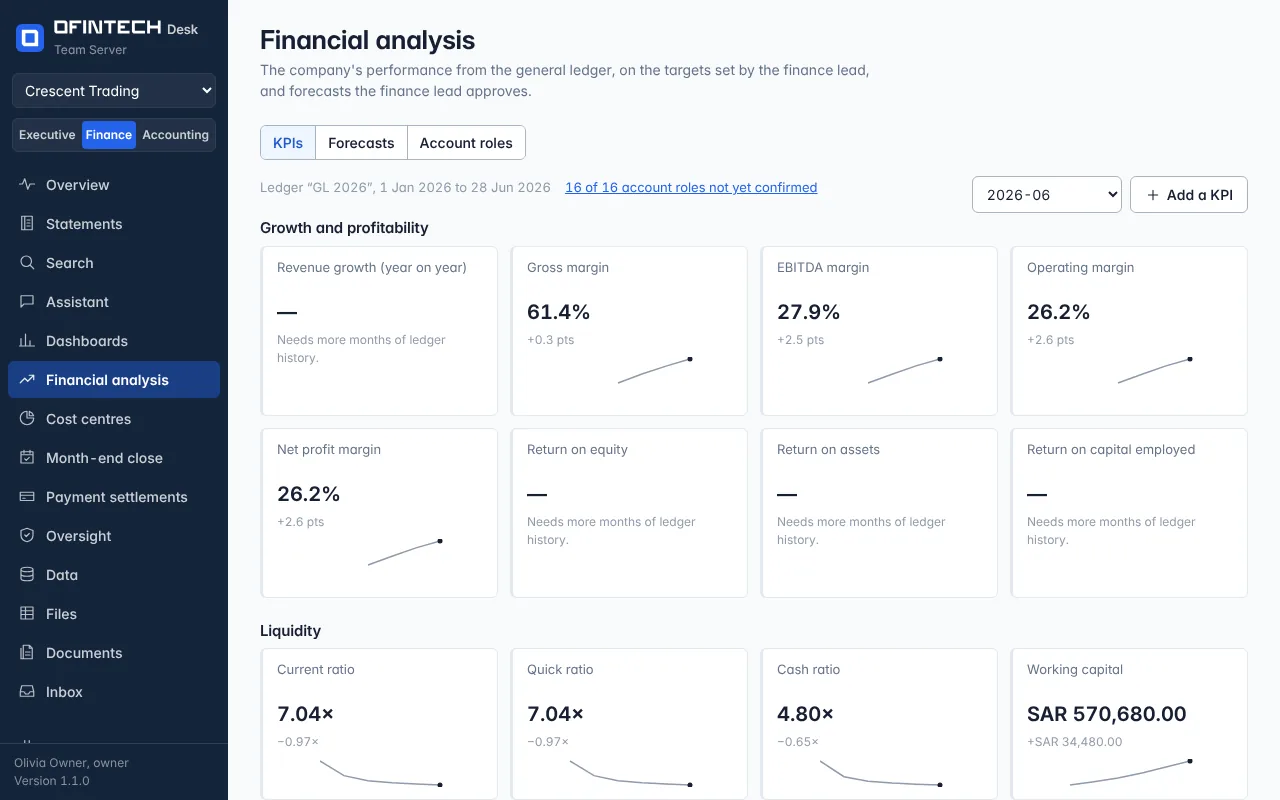
Financial analysis computes the ratios a finance lead watches — revenue growth, gross and operating margins, return on equity, current ratio, days of cash, DSO, DPO, DIO, the cash conversion cycle, overdue receivables and payables, debt to equity — from the general ledger, groups them as growth and profitability, working capital and cost and control, and shows each against its target.
Why it is there
A ratio without a target is a number. Here the finance lead sets the targets once, and every page that scores the business — the Overview first — judges against them rather than against generic levels.
When to open it
- When setting the year's targets
- Monthly, to see which ratios moved and why
- Before a forecast is approved, to see what it assumes
How it works
Each KPI opens to its formula and the accounts it reads. Targets and formulas are the finance lead's to change; the change is recorded. Forecasts are proposed, submitted and approved, and the approved one becomes the plan the Overview compares against.
A scenario
DSO rose from 31 to 47 days over a quarter. The KPI opens to the receivables it was built from; one customer accounts for the change. A target of 35 days is set, and the Overview now says collection rate is off track until it is back.
Steps
Read the three groups
Growth and profitability, working capital, cost and control.
Open a KPI
Its formula, its accounts and its history.
Set a target
The finance lead sets or changes it; the Overview judges against it from then on.